Modesty of slave girls

Is the awrah of slave-women not like that of free women? Were they not covered except what is between the navel and the knees? In other words, were they bare chested?[1] This is a very important and thoughtful question, and one that many students of Islamic history, law, and ethics have struggled with. Before we…
Clarifications regarding the (evil) eye

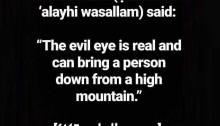
The following Hadith is under discussion:  ‘Amir b. Rabi’ah saw Sahl b. Hunayf’s (رضي الله عنه) body and commented: ‘By Allah! I haven’t seen such an attractive body. Sahl then fell to the ground. The Prophet (ﷺ) was dismayed and said: ‘Why do you’ll kill your fellow brothers. Why didn’t you make du’a for him to…

Questions and Answers (3)

This is the third page for question and answers. The first one and the second one have become very crowded and gone down in the list of articles and so a new page is dedicated for it. This blog witnesses a number of questions asked in the comments section that do not pertain to the article…

Refutation of ‘Embryology in the Qur’an: Much Ado About Nothing’

Martin Taverille wrote another piece trying to disprove the Qur’an.[1] His earlier piece can be found here. Martin comes from the mindset where he must find a way to disprove the Qur’an so he could comfort himself and those who find the menacing warnings in the Qur’an somewhat disturbing and wish to gain peace of…

Did the Qur’an plagiarize from the gospels of Thomas and Bartholomew?

The Gospel of Thomas The claim that the Qur’an plagiarized from the Gospel of Thomas, popularized in modern form by W. Atallah, rests on a methodological error: confusing shared religious vocabulary with literary dependence.[1] The Gospel of Thomas is not a Gospel in the historical sense The Gospel of Thomas is a 2nd-century Gnostic text,…

Was Abu Hurayrah (رضي الله عنه) a hypocrite because he ‘followed the Prophet (ﷺ) for food’?

Islamophobes often cite a statement attributed to Abu Hurayrah (رضي الله عنه): “I used to accompany Allah’s Apostle to fill my stomach”, claiming this proves he followed the Prophet Muhammad (ﷺ) for material benefit and was therefore a hypocrite. This argument collapses once the historical context, Arabic usage, and Islamic definition of hypocrisy are understood.…